How to Reduce Exterior Lighting Maintenance Costs: A Technical Strategy Guide
How to reduce exterior lighting maintenance costs. The financial burden of maintaining a commercial or large-scale residential lighting system is frequently underestimated at the point of installation. While capital expenditure (CAPEX) usually dictates initial procurement, the operational expenditure (OPEX) over a ten-to-fifteen-year horizon often dwarfs the original price tag. This discrepancy arises because exterior lighting exists in a perpetually hostile environment, subjected to ultraviolet degradation, moisture ingress, extreme thermal fluctuations, and physical impacts.
In a professional facility management context, “maintenance” is often a euphemism for reactive repair. This cycle of failure and response ordering parts, dispatching technicians, and managing downtime is inherently inefficient. To move toward a more sustainable fiscal model, one must view the lighting system not as a series of standalone fixtures, but as an integrated infrastructure. The goal of any high-level strategy is to extend the Mean Time Between Failures (MTBF) by addressing the root causes of systemic decay.
Understanding how to reduce exterior lighting maintenance costs requires a shift from transactional procurement to lifecycle engineering. It involves a rigorous evaluation of component chemistry, electrical protection, and site-specific environmental stressors. By the time a bulb burns out or a driver fails, the opportunity for cost reduction has already passed; the real savings are found in the architectural and technical decisions made years prior.
This article provides a systemic framework for deconstructing and optimizing the costs associated with outdoor illumination. We will analyze the physics of fixture failure, the economic reality of labor-intensive repairs, and the governance structures necessary to maintain peak performance with minimal intervention.
Understanding “how to reduce exterior lighting maintenance costs.”
To effectively tackle how to reduce exterior lighting maintenance costs, one must first dismantle the oversimplification that “LED conversion” is a panacea. While the transition from High-Intensity Discharge (HID) lamps to Solid-State Lighting (LED) drastically reduced energy consumption and lamp-change frequency, it introduced new failure modes. Modern maintenance costs are no longer driven by simple “bulb” replacement, but by the failure of complex electronic drivers, thermal management systems, and ingress protection (IP) seals.
A multi-perspective explanation of cost reduction involves three distinct domains:
-
The Material Domain: The chemistry of the housing and lenses. (e.g., choosing marine-grade 316 stainless steel over powder-coated aluminum in coastal regions).
-
The Electrical Domain: The protection of sensitive electronics from “dirty” power and lightning surges.
-
The Labor Domain: The logistical cost of accessing a fixture—often exceeding the cost of the replacement part itself.
A common misunderstanding is that purchasing the “most durable” fixture is always the best path to savings. In reality, over-specifying in a low-risk environment creates an unrecoverable “sunk cost.” Conversely, under-specifying in a high-traffic or harsh-weather zone leads to a compounding maintenance debt. True cost management is the art of matching the fixture’s engineering to the site’s specific environmental profile.
Deep Contextual Background: The Industrial Shift
Historically, exterior lighting maintenance was a predictable, if frequent, task. The “relamping” cycle of High-Pressure Sodium or Metal Halide fixtures occurred every 12,000 to 20,000 hours. Facilities managers could schedule mass relamping events to capture economies of scale in labor. The hardware was simple, and the failure modes were almost always the lamp or the magnetic ballast.
The LED revolution changed the math. We moved from 20,000-hour lifespans to 50,000 or even 100,000 hours. However, this longevity is theoretical. While the diode might last a decade, the driver, the “brain” of the fixture, is often rated for much less, especially if exposed to heat. The “Historical Evolution” of maintenance has thus shifted from predictable lamp changes to unpredictable electronic failures.
Today, the focus has moved toward “modular” and “future-proof” designs. As the industry matures, the ability to replace a driver without discarding the entire $400 fixture has become the primary metric for cost-conscious management. We are currently in an era of “Surge and Thermal Awareness,” where the electrical environment is treated as a critical variable in longevity.
Conceptual Frameworks and Mental Models
1. The Access-to-Cost Ratio
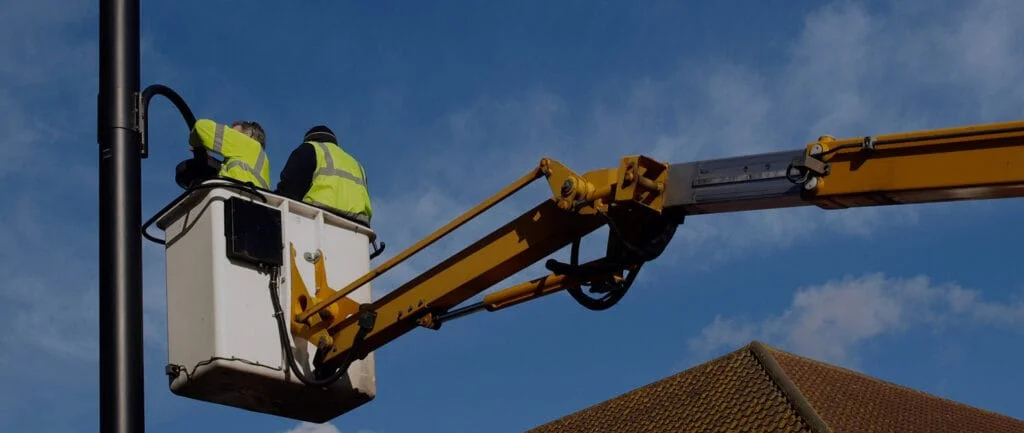
This model posits that the higher a fixture is mounted, the more its maintenance cost is tied to labor rather than parts. A fixture on a 30-foot pole requiring a bucket truck rental has an Access-to-Cost ratio that demands “Tier 1” ultra-durable components. A ground-level path light can afford “Tier 2” components because the labor to replace it is negligible.
2. The Ingress Protection (IP) Integrity Loop
This framework suggests that a fixture is only as durable as its seals. Once a gasket fails due to UV exposure, moisture enters, and the electronics fail. Maintenance reduction is therefore synonymous with “seal governance.”
3. The Thermal Ceiling Model
LEDs are heat-sensitive. This model defines a “thermal ceiling” for every installation. If a fixture is installed in a south-facing, unshaded area with poor heat-sinking, its lifespan will be truncated by 50% regardless of its brand.
Key Categories of Hardware and Their Trade-offs
Choosing the right technology is the foundational step in managing long-term expenses.
| Technology/Feature | Maintenance Impact | Trade-off | Best Use Case |
| Integrated LED | Low (no lamp changes) | Must replace the whole unit if the driver fails | Standard commercial parking |
| Modular LED (Field Replaceable) | Lowest (driver/light engine swap) | Higher initial purchase price | High-mast lighting, municipal |
| Marine-Grade Finish | Prevents corrosion-driven failure | High cost; limited aesthetic options | Coastal or high-salt environments |
| Surge Protection (10kV/20kV) | Prevents catastrophic electrical failure | Adds bulk to the fixture housing | Storm-prone regions; unstable grids |
| Smart Controls/DALI | Allows remote health monitoring | High complexity; requires software upkeep | Large campuses; “Dark Sky” compliance |
Decision Logic: Integrated vs. Modular
For a small retail strip with four lights, the “Integrated” model is often cheaper. For a hospital campus with 500 lights, the “Modular” model is mandatory to avoid massive waste and labor costs during the “mid-life” of the system.
Detailed Real-World Scenarios
Scenario A: The Coastal Hospitality Failure
A resort installed powder-coated aluminum fixtures along an oceanfront walkway. Within 18 months, “filiform corrosion” had compromised the seals.
-
The Error: Ignoring the saline environment in favor of lower CAPEX.
-
The Fix: Transitioning to copper or 316-grade stainless steel fixtures with no painted surfaces.
-
Outcome: Maintenance costs dropped to near-zero for the subsequent five years.
Scenario B: The Industrial Surge Cycle
A warehouse facility in the Midwest experienced driver failures every spring during storm season.
-
The Error: Relying on the fixture’s internal, basic surge protection.
-
The Fix: Installing secondary, replaceable surge arrestors at the base of each pole.
-
Outcome: The $30 arrestors took the hit during lightning strikes, protecting the $600 fixtures.
Planning, Cost, and Resource Dynamics
The economics of maintenance reduction are best understood through a Range-Based Cost Table.
| Expense Category | Reactive Model (Annual) | Proactive Model (Annual) | Delta/Savings |
| Replacement Parts | $1,200 | $400 | $800 |
| Labor/Equipment Rental | $3,500 | $800 | $2,700 |
| Energy Inefficiency | $500 | $0 | $500 |
| Total OPEX | $5,200 | $1,200 | $4,000 |
Opportunity Cost: Beyond direct dollars, the opportunity cost of reactive maintenance includes lost productivity, reduced security during dark periods, and the potential for liability claims due to “slip and fall” incidents in unlit areas.
Tools, Strategies, and Support Systems
To reduce maintenance overhead, the following “Force Multipliers” should be employed:
-
Thermal Imaging: Using handheld infrared cameras to detect drivers that are running significantly hotter than their peers—a leading indicator of imminent failure.
-
Astro-Timers/Photocells: Ensuring lights are never “burning daylight,” which wastes both energy and the limited life-hours of the LED.
-
Group Relamping/Refurbishing: If one driver fails on a pole, replace all drivers in that bank while the bucket truck is already on-site.
-
Corrosion-Inhibiting Gels: Apply dielectric grease to all electrical connections to prevent oxidation in humid environments.
-
Vibration Dampeners: Essential for bridge-mounted or high-wind area fixtures where mechanical stress can crack solder joints.
-
Remote Power Monitoring: Smart panels that alert the manager when a circuit’s amperage changes, indicating a partial failure before it becomes a total outage.
Risk Landscape and Failure Modes
Taxonomy of Failure
-
Chemical Failure: Plastic lenses turning yellow (UV degradation) or becoming brittle, eventually cracking and allowing water entry.
-
Galvanic Corrosion: Occurs when stainless steel screws are used in aluminum housings without a barrier, causing the metals to fuse and making the fixture unserviceable.
-
Thermal Fatigue: Repeated expansion and contraction of components in desert climates eventually snap internal connections.
Compounding Risks
A single “leaky” fixture can trip a GFCI (Ground Fault Circuit Interrupter), taking down an entire circuit of 20 lights. This compounding effect means that the maintenance cost of one cheap fixture can be the diagnostic labor for an entire system.
Governance, Maintenance, and Long-Term Adaptation
Effective maintenance reduction requires a “Governance” document—a set of rules that dictates how the system is handled over decades.
The Maintenance Lifecycle Checklist
-
Quarterly: Visual “drive-by” audits to check for flickering or dimming.
-
Biannually: Cleaning of lenses. Dirt buildup can reduce light output by 20%, often leading managers to mistakenly believe the LED is “dying” and needs replacement.
-
Every 3 Years: Torque-checking all mounting hardware and inspecting gaskets for signs of dry-rot.
-
Trigger Points: Define a “replacement threshold.” If a specific model of fixture has a failure rate of >15% in a single year, it is more cost-effective to perform a “fleet replacement” than to continue piecemeal repairs.
Measurement, Tracking, and Evaluation
You cannot manage what you do not measure. A professional lighting log should track:
-
Leading Indicators: Operating temperature vs. Ambient temperature; Surge arrestor status.
-
Lagging Indicators: Mean Time Between Failures (MTBF); Total labor hours per fixture per year.
Common Misconceptions and Oversimplifications
-
“LEDs last forever.” They don’t. The light output slowly degrades (L70 rating), and the electronics are highly vulnerable to heat and moisture.
-
“IP65 is enough for all outdoor use.” Not necessarily. For fixtures near sprinklers or high-pressure washers, IP66 or IP67 is required to prevent water “injection.”
-
“Turning lights off and on reduces life.” In the LED era, this is false. Unlike HID lamps, LEDs are not stressed by frequent switching; in fact, dimming or turning them off extends life by reducing heat.
-
“Cheaper fixtures are fine for temporary buildings.” “Temporary” often becomes permanent. The maintenance on cheap fixtures usually exceeds their purchase price within 24 months.
-
“The warranty covers maintenance.” Warranties usually cover the part, not the labor to get the part into the air.
Ethical and Practical Considerations

There is an ethical dimension to maintenance: Sustainability. A lighting system that is designed for easy repair reduces the volume of aluminum and electronics that end up in landfills. From a practical standpoint, “Dark Sky” compliance is often a maintenance reducer as well; by pointing light downward and using lower intensities, you reduce the strain on the hardware and the glare for the community.
Conclusion
The pursuit of how to reduce exterior lighting maintenance costs is ultimately a pursuit of Systemic Resilience. It requires moving away from the “lowest bidder” mentality and toward a sophisticated understanding of environmental physics. By investing in modular hardware, protecting the electrical path with robust surge mitigation, and implementing a governance model based on preventative care, facilities can transform lighting from a variable liability into a stable, long-term asset. The most cost-effective maintenance is the maintenance that never has to happen.