Compare Flood Light Systems: The Definitive Engineering & ROI Guide
Modern illumination is no longer a matter of simply mounting a high-wattage bulb to a pole and hoping for the path of least resistance. In the current landscape of industrial, commercial, and high-end residential infrastructure, lighting has evolved into a sophisticated discipline of photon management. To effectively compare flood light systems, one must look past the initial lumen output and interrogate the relationship between thermal management, optical precision, and power density. The stakes involve more than just visibility; they encompass energy lifecycle costs, light pollution mitigation, and the psychological impact of color temperature on human environments.
The complexity of these systems stems from the transition from traditional high-intensity discharge (HID) sources to solid-state lighting (SSL). While the market has largely standardized on Light Emitting Diodes (LEDs), the internal architecture of these units’ drivers, heat sinks, and secondary optics varies wildly. A system designed for a marine shipyard faces vastly different chemical and physical stressors than one intended for a suburban sports complex. Understanding these nuances is the difference between a system that lasts fifteen years and one that fails after twenty-four months of thermal cycling.
This analysis serves as an exhaustive reference for those tasked with the procurement, design, or maintenance of large-scale illumination projects. It moves beyond the spec sheet to examine how light behaves in three-dimensional space and how different hardware configurations respond to real-world variables. By dissecting the engineering trade-offs inherent in various designs, we provide a framework for evaluating value that transcends the simple price-per-unit metric.
Compare Flood Light Systems: A Multi-Dimensional Perspective

To compare flood light systems effectively, an evaluator must resist the urge to treat them as commodity hardware. The most common misunderstanding in procurement is the “lumen-to-lumen” fallacy. While total luminous flux is a necessary data point, it says nothing about the quality of the beam or the efficiency of the delivery. A 50,000-lumen system with poor optics may spill 30% of its light into the night sky or onto adjacent properties, rendering it less effective than a 35,000-lumen system with precise cut-off angles.
Another risk of oversimplification lies in ignoring the “driver-to-chip” relationship. The LED chip itself rarely fails; rather, the electronic driver, the component that converts AC to DC power, is the most frequent point of system collapse. When we compare flood light systems, we are essentially comparing the robustness of their power electronics and their ability to shed heat. Heat is the natural enemy of semiconductor longevity. A system that appears cheaper often achieves that price point by using a smaller, less efficient heat sink, which forces the LEDs to run at higher internal temperatures, accelerating lumen depreciation.
Furthermore, the comparison must account for the “Spectral Power Distribution” (SPD). High-wattage floodlights are often judged by their Color Correlated Temperature (CCT), measured in Kelvins. However, two 4000K lights can have significantly different impacts on visibility depending on their Color Rendering Index (CRI) or the newer TM-30-15 metrics. In security contexts, the ability to distinguish between colors is often more critical than the raw brightness of the scene.
Deep Contextual Background: From Fire to Semiconductors
The history of flood lighting is a trajectory of increasing control. Early systems relied on carbon arc lamps, which were cumbersome, dangerous, and required constant manual adjustment of the electrodes. The mid-20th century saw the dominance of High-Pressure Sodium (HPS) and Metal Halide (MH) systems. These were the workhorses of the industrial era, characterized by long warm-up times and a distinct orange or cool-blue hue.
HPS was prized for its high efficacy and long life, but its poor color rendering made it unsuitable for environments where visual detail mattered. Metal Halide offered better color but suffered from rapid lumen depreciation and the risk of “non-passive failure” an industry euphemism for the bulb exploding at the end of its life.
The shift to LED technology around 2010 fundamentally changed the “compare flood light systems” discourse. We moved from replacing bulbs to replacing integrated luminaires. This shift introduced the concept of the “useful life” (typically L70 the point where light output drops to 70% of its original value) rather than a binary “burn out.” This historical context is vital because many existing infrastructures are still transitioning from these legacy systems, and the mounting heights, spacing, and electrical loads designed for HPS are often poorly suited for the directional nature of LEDs.
Conceptual Frameworks and Mental Models
When evaluating lighting, professionals use specific mental models to navigate the complexity of the physics involved.
1. The Inverse Square Law and Beam Spread
The intensity of light decreases inversely with the square of the distance from the source. In flood lighting, this means that doubling the mounting height requires four times the light output to maintain the same foot-candle level on the ground. When you compare flood light systems, you must consider the “Beam Angle” versus the “Field Angle.” The beam angle is where the intensity is 50% of the maximum; the field angle is 10%. A narrow beam might reach further, but creates “hot spots” that can blind or obscure detail.
2. Thermal Equilibrium Lag
This model considers the system’s performance after several hours of operation. Many LED systems perform excellently for the first ten minutes, but as the junction temperature rises, efficiency drops. A superior system is designed to reach thermal equilibrium at a temperature low enough to protect the phosphorus coating on the LED, ensuring color stability over years of use.
3. The “Full Cut-Off” Paradigm
This is the framework of light trespass. In modern lighting design, the goal is to put light exactly where it is needed and nowhere else. This is measured by the BUG rating (Backlight, Uplight, and Glare). High-end systems utilize complex TIR (Total Internal Reflection) lenses to “shape” the light, pulling it away from the sky and directing it into a uniform “throw” across the target surface.
Taxonomy of Flood Lighting Systems: Categories and Trade-offs
Choosing the right system requires categorizing the hardware based on its intended operational intensity and environmental exposure.
| Category | Primary Use Case | Typical Wattage | Optical Control | Durability Rating |
| Architectural | Facade highlighting | 10W – 150W | Very High (TIR) | IP66+ |
| Industrial/Area | Parking lots, yards | 100W – 400W | Medium (Reflectors) | IK08 Impact |
| Sports/Stadium | Arenas, large fields | 500W – 1500W+ | Ultra-High (Laser-aimed) | High Vibration |
| Hazardous Location | Refineries, mines | 50W – 300W | Medium | Explosion Proof |
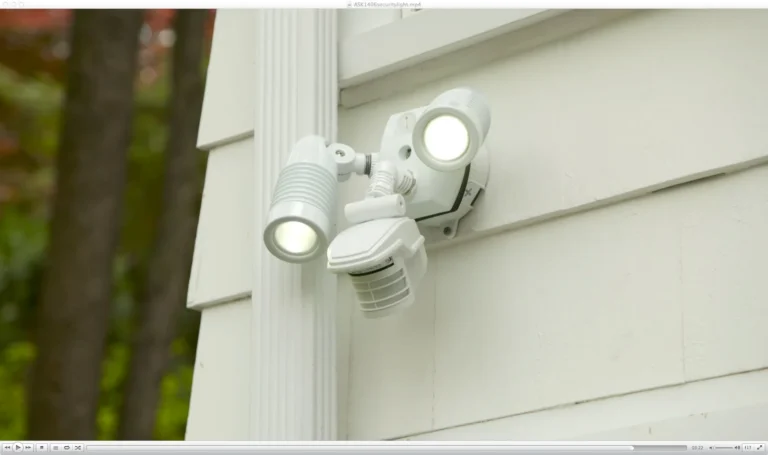
| Security/Portable | Construction, temporary | 30W – 100W | Low (Wide flood) | High Portability |
Comparison Logic: The Decision Matrix
To compare flood light systems within these categories, one must look at the Lumen per Watt (LPW) ratio. A system producing 150 LPW is significantly more advanced than one producing 100 LPW, as it generates less waste heat for every unit of light produced. However, in an industrial setting, the IK Rating (impact protection) might be more important than the LPW. If a light is mounted in a warehouse where it might be struck by a forklift, a high-efficiency but fragile plastic lens is a liability.
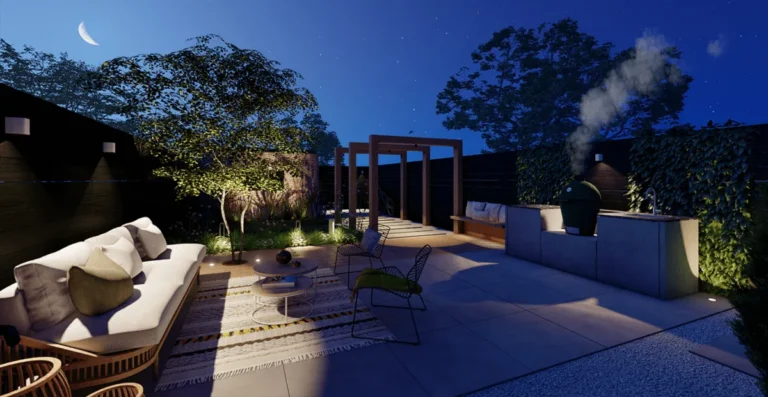
Conversely, in architectural applications, the CCT Consistency (measured in MacAdam Ellipses) is the priority. You do not want a building facade to look “patchy” because five different fixtures have five slightly different shades of white.
Real-World Application Scenarios

The High-Salinity Coastal Environment
In a coastal port, the primary failure mode is not electrical; it is galvanic corrosion. When you compare flood light systems for this use case, the housing material and finish are paramount. An anodized or marine-grade powder-coated aluminum housing with 316-grade stainless steel hardware is mandatory. Using a standard “off-the-shelf” industrial floodlight here will result in the housing pitting and the seals failing within 18 months, leading to internal water ingress.
The Logistics Hub and “Ghosting”
In a 24/7 distribution center, the interaction between lighting and CCTV systems is a critical second-order effect. Low-quality LED drivers often exhibit “flicker” a rapid modulation of light that is invisible to the human eye but creates “banding” or “ghosting” on security camera footage. A comparison of systems must include the “Flicker Index.” A system with less than 1% flicker is necessary for high-speed camera environments.
Sports Lighting and Glare Control
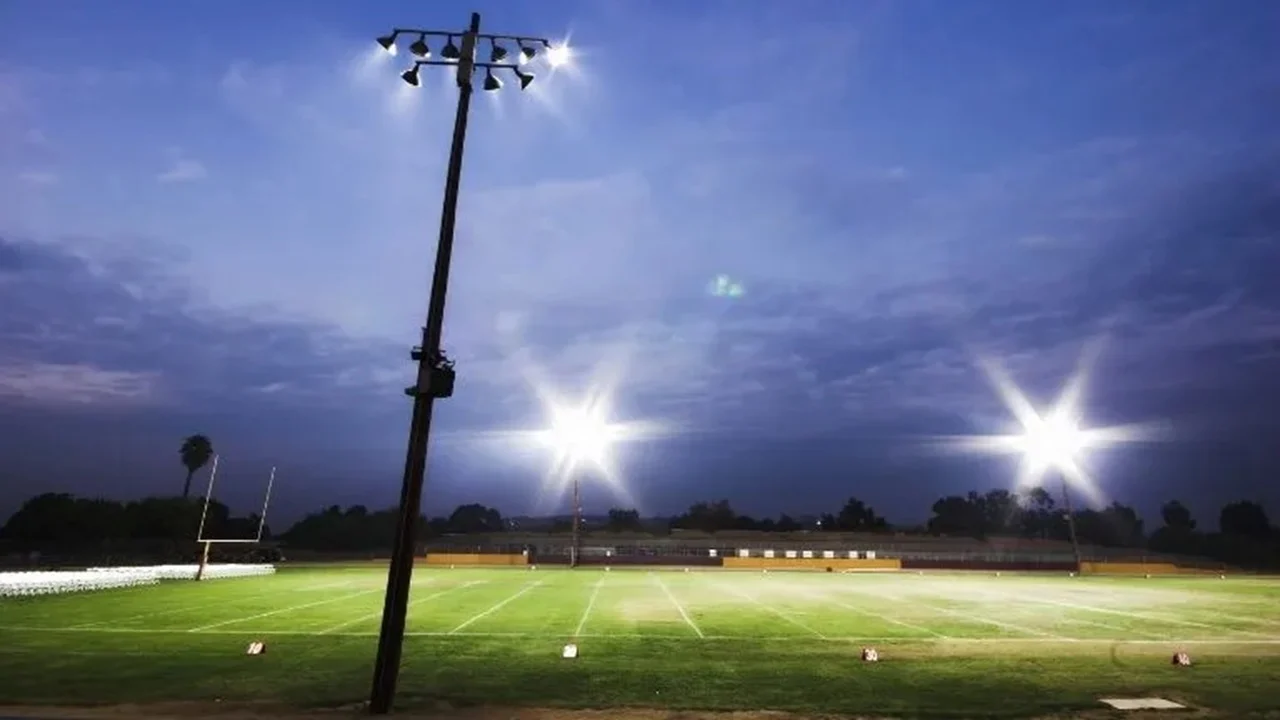
For a local municipal ball field, the primary constraint is often the neighboring residential area. The “failure mode” here is a lawsuit or a zoning violation due to light trespass. Here, the comparison shifts to the shielding accessories visors, barn doors, and internal louvers. The goal is a “sharp cutoff” where the light stops abruptly at the fence line.
Economic Dynamics: Beyond the Initial Invoice
The true cost of a floodlight system is hidden in its operational tail. A “cheaper” system often carries an opportunity cost in the form of downtime and specialized equipment rental (e.g., bucket trucks) for repairs.
| Cost Component | Budget System (Low-End) | Premium System (High-End) | Impact on 10-Year TCO |
| Purchase Price | $150 | $550 | Low (Initial CapEx) |
| Energy Consumed | 300W (Higher heat) | 180W (High efficiency) | High (Annual OpEx) |
| Replacement Cycle | Every 3-4 years | 12-15 years | Very High (Labor/Parts) |
| Control Integration | None/Manual | DALI/0-10V/Smart | Medium (Optimization) |
When you compare flood light systems, the energy savings alone often pay for the “premium” system within three years. However, the indirect costs such as the liability of a dark parking lot during a multi-week delay for a proprietary driver replacement are harder to quantify but arguably more important for risk management.
Tools, Strategies, and Support Systems
Modern lighting is an ecosystem, not a standalone fixture.
-
Photometric Software (AGi32/Visual): These tools allow designers to create a digital twin of the environment to predict foot-candle levels and uniformity.
-
Surge Protection Devices (SPDs): LEDs are highly sensitive to voltage spikes. A robust system includes a 10kV or 20kV surge protector as a sacrificial first line of defense.
-
0-10V and DALI Dimming: These protocols allow the system to scale output based on occupancy or ambient daylight, significantly extending the lifespan of the components.
-
Thermal Throttling: Advanced drivers can sense when the fixture is overheating and automatically dim the light slightly to prevent permanent damage to the LEDs.
-
NEMA Receptacles: Standardized sockets on top of the fixture that allow for the easy addition of photocells or “smart city” nodes.
-
Pressure Equalization Vents: These allow the fixture to “breathe” as it heats and cools, preventing internal condensation and seal failure.
The Risk Landscape: Assessing Longevity and Reliability
The risk landscape of flood lighting is dominated by “compounding failures.” For example, a minor seal compromise leads to moisture ingress; this moisture then causes a short circuit in the driver; the failed driver then puts an uneven electrical load on the remaining fixtures on that circuit, potentially triggering a broader electrical failure.
When one begins to compare flood light systems, they must look at the warranty terms with a skeptical eye. A “10-year warranty” is meaningless if it only covers the LED chips and not the driver, or if the labor costs for replacement (which often exceed the fixture cost) are excluded. Reliability is also a function of “Derating” the practice of running components below their maximum rated capacity to ensure longevity. A manufacturer that pushes its LEDs to their absolute limit to claim a higher lumen count is inherently riskier than one that uses more chips at a lower power density.
Governance, Maintenance, and Long-Term Adaptation
A lighting system is a living asset. Effective governance involves a structured review cycle to ensure the system still meets the site’s needs as the environment changes (e.g., trees growing and blocking light, or a change in the facility’s security classification).
Layered Maintenance Checklist
-
Visual Inspection (Quarterly): Check for lens clouding, insect nests in heat sinks, and loose mounting hardware.
-
Cleaning (Bi-Annually): Dust and dirt on the lens can reduce light output by 10-15% (the “Lumen Dirt Depreciation” factor).
-
Electrical Testing (Annually): Check for voltage drop and ensure surge protectors haven’t been “spent.”
-
Photometric Audit (Every 3 Years): Use a light meter to verify that the light levels haven’t dropped below the safety minimums established during design.
Measurement, Tracking, and Evaluation
How do you know if the system you chose was the correct one?
-
Quantitative Signal: Use a light meter to measure “Uniformity Ratio” (the ratio of the brightest spot to the dimmest). A lower ratio means more even light, which is safer for navigation.
-
Qualitative Signal: Surveys of night-shift staff or security personnel regarding glare and eye fatigue.
-
Leading Indicator: Monitoring the “Power Factor” of the lighting circuit. A drop in power factor can indicate that the drivers are beginning to degrade before the light output actually fails.
-
Documentation Example: Maintain a “Maintenance Log” that tracks the date of install, the specific batch or “bin” of LEDs used, and the ambient temperature at the time of any failure.
Common Misconceptions and Oversimplifications
-
“Higher Wattage Means More Light”: False. Wattage is energy consumed. Lumens are light produced. Focus on efficacy (Lumens/Watt)
-
“LEDs Last Forever”: False. LEDs don’t “burn out,” they dim. Most “100,000-hour” ratings refer only to the chips under laboratory conditions, not the driver in a humid, 100-degree environment.
-
“Cool White (6000K) is Always Better for Security”: False. High-blue light scatters more in fog or rain (Rayleigh scattering), actually reducing visibility compared to a warmer 3000K or 4000K source.
-
“IP65 is Enough for All Outdoor Use”: Not necessarily. IP65 protects against water jets, but IP67 is required for temporary submersion, and IP69K is needed for high-pressure washdowns in food processing.
-
“All LED Dimmers are Compatible”: False. PWM (Pulse Width Modulation) and Constant Current Reduction (CCR) dimming act differently and must be matched to the driver.
-
“Solar Flood Lights are a Direct Replacement”: False. Current battery and PV technology generally cannot match the sustained, high-intensity output of grid-tied systems for industrial use cases.
Synthesis: The Judgment of Quality
To compare flood light systems is to perform a balancing act between physics, economics, and environmental stewardship. The definitive choice is rarely the one that shines the brightest in a showroom; it is the one that maintains its photometric integrity through five years of seasonal extremes, power fluctuations, and neglect. A superior system is characterized by its “quietness” it provides uniform, glare-free illumination that enhances the safety and utility of a space without drawing attention to its own presence or contributing to the degradation of the night sky.
In the final analysis, the most important metric is Topical Relevance. The best system for a maximum-security prison is a failure for a public park. Success requires a deep interrogation of the specific site constraints and an honest assessment of the long-term operational capacity of the owner.