Patio Lighting Planning Tips: A Comprehensive Architectural & Technical Guide
The design of a patio environment is often treated as a secondary architectural concern, yet the nocturnal utility of an outdoor space is entirely dependent on the quality of its illumination. When the sun sets, the physical boundaries of a patio, be they stone, wood, or landscaping, effectively disappear unless they are intentionally redefined through light. This process of redefinition requires more than choosing aesthetically pleasing fixtures; it demands a rigorous understanding of light physics, human visual perception, and the structural constraints of exterior environments.
Sophisticated patio lighting serves a dual purpose: it must provide the functional clarity necessary for safe movement and task performance while simultaneously establishing a psychological atmosphere that encourages relaxation or social interaction. Achieving this balance is a complex undertaking that involves managing glare, color temperature, and light spill. Without a cohesive plan, outdoor spaces often succumb to “hot spots” of intense brightness contrasted with “black holes” of impenetrable shadow, both of which render the space uncomfortable and visually disjointed.
As we move toward more integrated indoor-outdoor living, the technical requirements for patio systems have become increasingly stringent. Modern homeowners and designers must now navigate a landscape of high-efficiency LEDs, complex automation protocols, and environmental regulations regarding light pollution. This article serves as a definitive reference for those seeking to move beyond surface-level decorating into the realm of professional-grade exterior lighting design.
Patio lighting planning tips
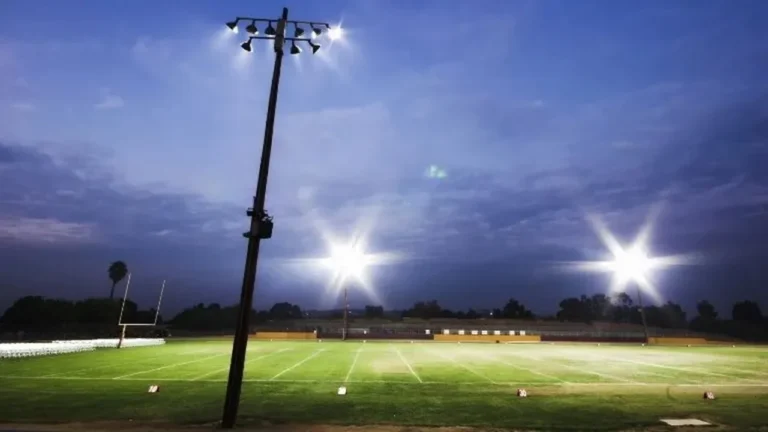
To understand the scope of professional patio lighting planning tips, one must first discard the notion that lighting is a localized task. A superior plan treats the patio as a series of interconnected visual planes. The most common oversimplification in this field is the “floodlight fallacy,” the belief that a single, high-intensity light source is sufficient for safety and utility. In reality, such an approach causes pupil constriction, making the areas just outside the light beam appear darker and more dangerous than they would be in natural moonlight.
A nuanced perspective views lighting through the lens of optical comfort. This involves the strategic placement of light sources to avoid direct “line-of-sight” exposure to the lamp itself. The “idea” here is to see the effect of the light, not the fixture. Professionals prioritize indirect illumination, utilizing surfaces like patio covers, stone walls, and foliage to bounce and soften the light.
Furthermore, a technical guide must address the phenomenon of light trespass. In densely populated residential areas, your lighting plan is not just an internal decision; it is a neighborhood variable. Planning must account for how light spills over property lines, ensuring that your ambiance does not become your neighbor’s nuisance. This requires a granular understanding of beam spreads and shielding concepts that are foundational to any high-level set of planning tips.
Historical Context: From Utilitarianism to Atmosphere
Historically, patio lighting was a rudimentary affair, limited by the constraints of high-voltage incandescent bulbs that were expensive to operate and difficult to hide. Early 20th-century outdoor lighting was primarily defensive, designed to ward off intruders or provide basic visibility for entryways. The hardware was bulky, and the wiring requirements were intrusive, often requiring deep trenching and rigid conduit that made retrofitting a patio a massive logistical hurdle.
The mid-century shift toward “California living” began to change the aesthetic requirements of the patio. As the patio became an extension of the living room, lighting began to mimic interior design principles. However, it wasn’t until the revolution in low-voltage (12V) systems and, subsequently, the advent of solid-state LED technology, that truly sophisticated planning became possible.
Today, we are in the era of precision illumination. We no longer rely on broad strokes of light. Current systems allow for dimming, color-tuning, and zone-based control that was technically impossible even twenty years ago. The evolution from “burning filament” to “digital light” has turned the patio into a dynamic stage that can be reprogrammed for different moods and seasons.
Conceptual Frameworks and Mental Models
To organize a complex lighting project, designers use several mental models that help categorize priorities and limit errors.
The Layered Lighting Framework
This is the industry standard for creating depth. It involves three distinct layers:
-
Task Layer: Specific illumination for high-activity areas like outdoor kitchens, grill stations, or staircases.
-
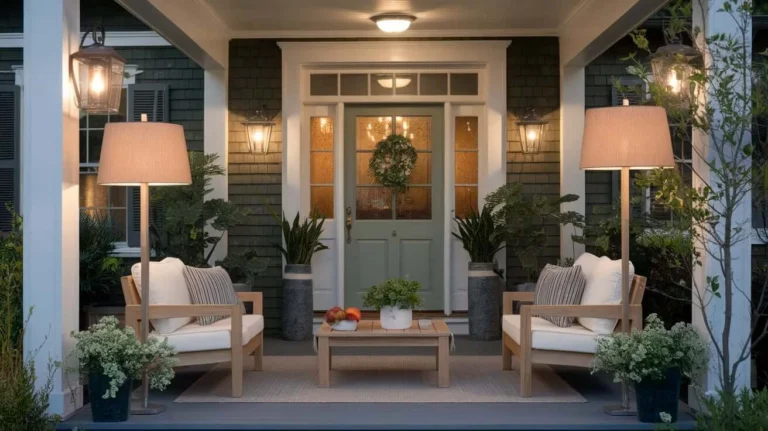
Ambient Layer: The “fill” light that provides general visibility and defines the boundaries of the patio.
-
Accent Layer: Decorative lighting used to highlight architectural features, water elements, or specimen plants.
The Inside-Out Perspective
This framework suggests that a patio should be planned from the perspective of the interior of the house. Because patio doors are often glass, an unlit patio acts as a giant mirror at night, reflecting the interior and making the house feel claustrophobic. By lighting the exterior to a slightly higher intensity than the interior reflections, the glass “disappears,” and the patio becomes a visual extension of the indoor room.
The Rule of Contrast
The human eye is drawn to the brightest point in a field of vision. This model helps designers avoid “visual clutter” by ensuring that focal points (like a fire pit or a fountain) have a higher light intensity than the surrounding circulation paths.
Key Categories and Technical Trade-offs
Selecting hardware is a balance of aesthetics, durability, and light quality. Below is a comparison of the primary categories of patio lighting.
| Category | Typical Application | Advantages | Trade-offs |
| Path/Bollard | Walkways & Perimeters | Enhances safety; defines edges | Prone to damage from lawn equipment |
| Recessed/In-grade | Decks & Stone Patios | Seamless look; no trip hazard | Difficult to repair; prone to debris buildup |
| Sconces/Wall Mount | Structural Perimeters | Architectural continuity | Can create glare if not shielded |
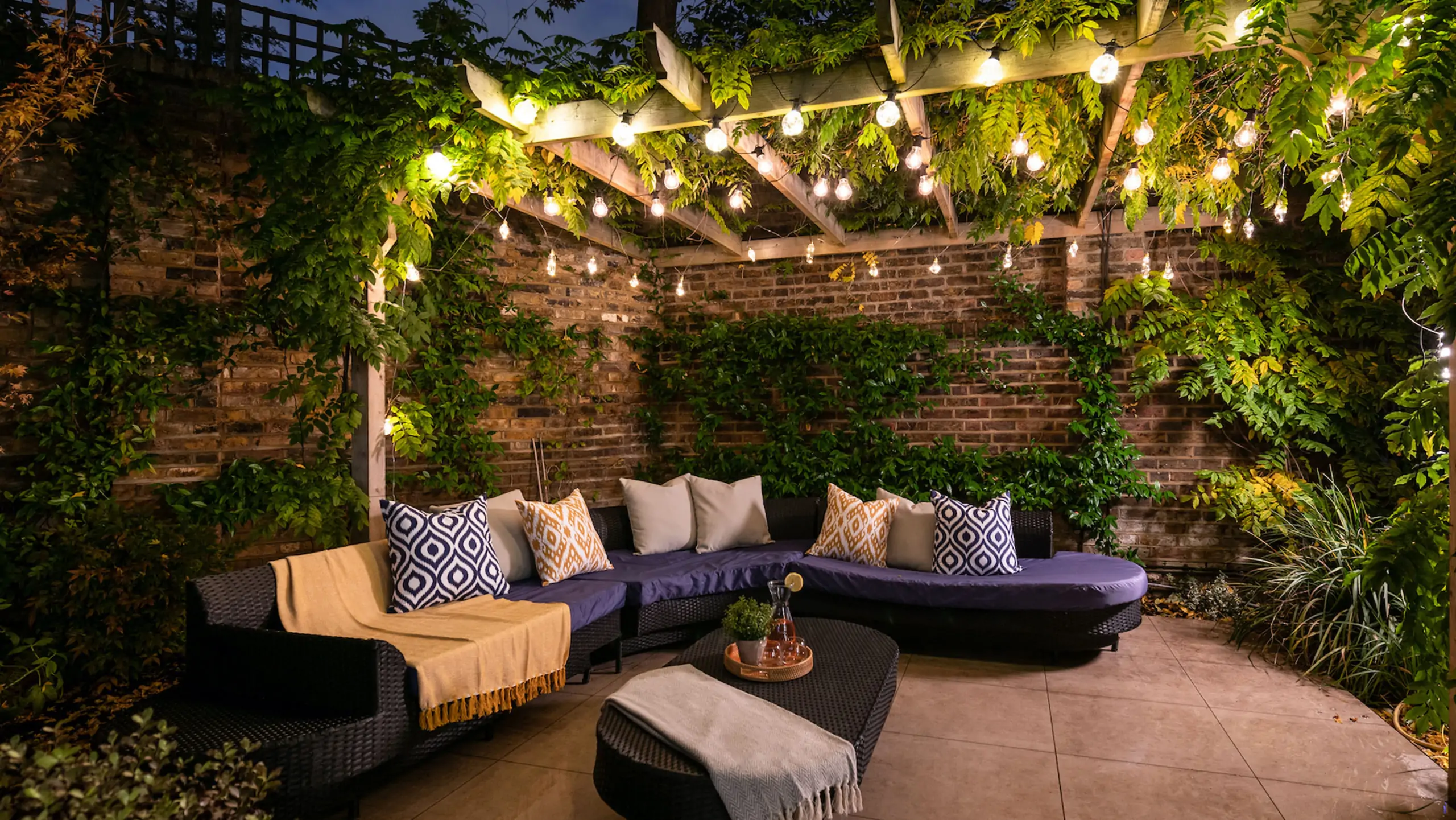
| String/Bistro | Overhead Voids | High “festival” atmosphere | Vulnerable to wind; high maintenance |
| Downlighting | Trees or Overhangs | Natural “moonlight” effect | Requires height; difficult to install |
| Linear/Strip | Under-cap/Step Treads | Discreet; high safety value | Requires precise hidden channels |
Decision Logic: Hardscape vs. Softscape
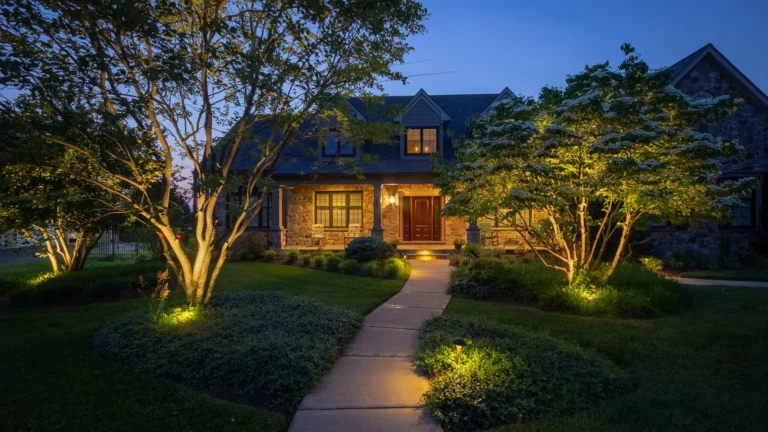
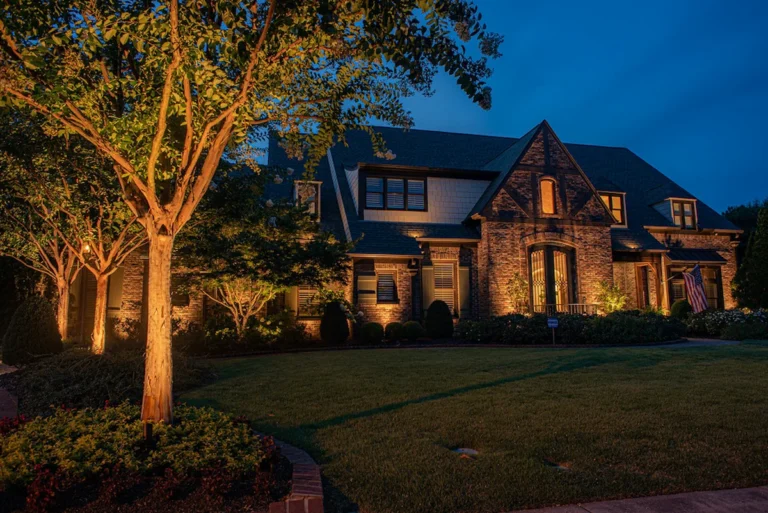
When planning, you must decide if you are lighting the structure or the nature. Hardscape lighting (integrated into stone or wood) is permanent and should be installed during construction. Softscape lighting (staked into the ground) allows for flexibility as the garden grows. The most resilient plans use a 70/30 split, favoring permanent hardscape lighting for safety and flexible softscape lighting for aesthetics.
Real-World Scenarios and Decision Logic

The Modernist Glass-Walled Patio
Constraint: Extreme reflection issues and minimal places to hide fixtures.
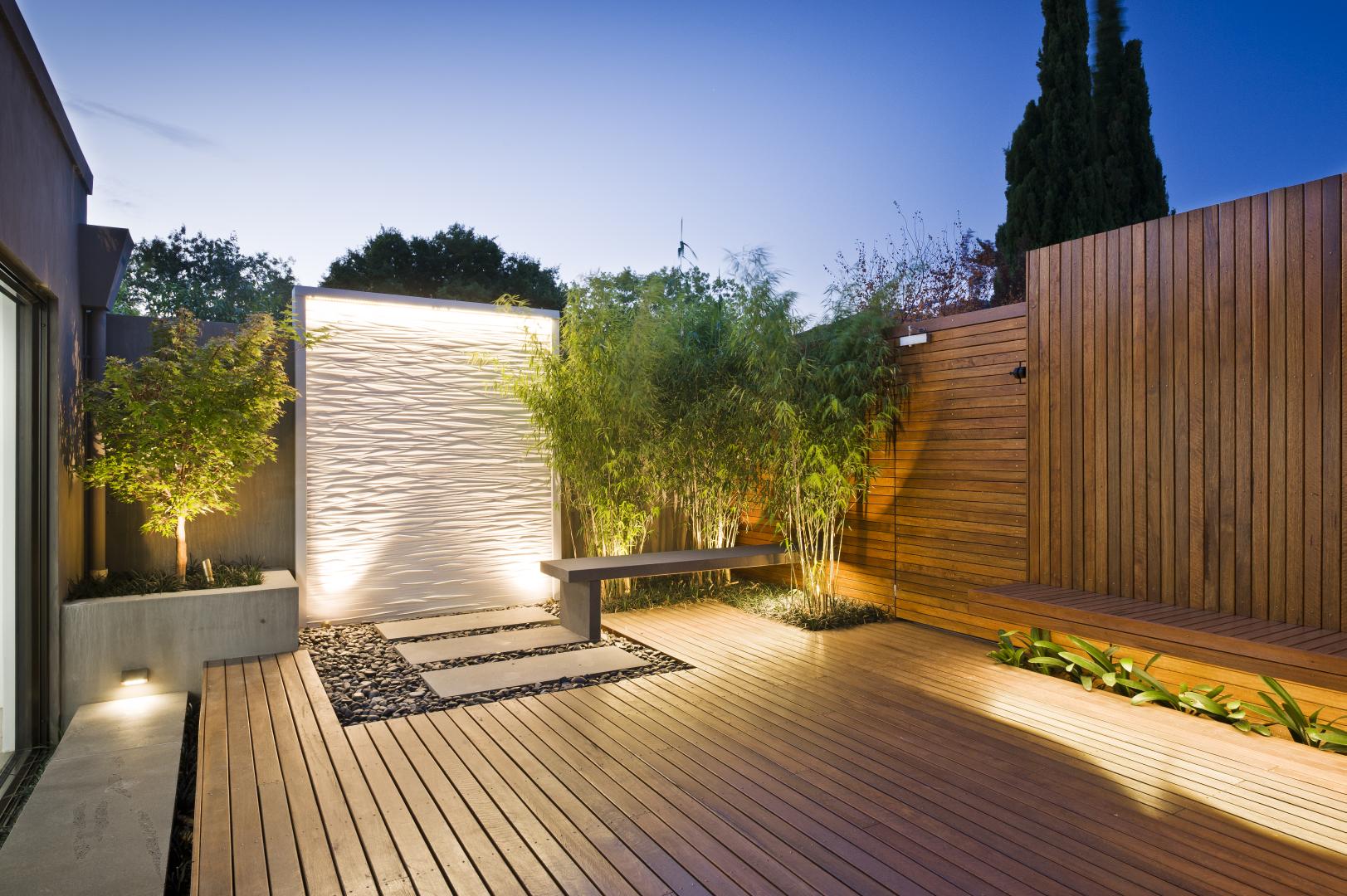
Planning Logic: Use “grazing” techniques on the far perimeter walls to draw the eye away from the glass. Avoid all high-mounted wall sconces.
Failure Mode: Placing bright path lights near the glass, causing “hot spots” that reflect into the living room.
The Multi-Level Wood Deck
Constraint: High fall risk at stairs and uneven transitions.
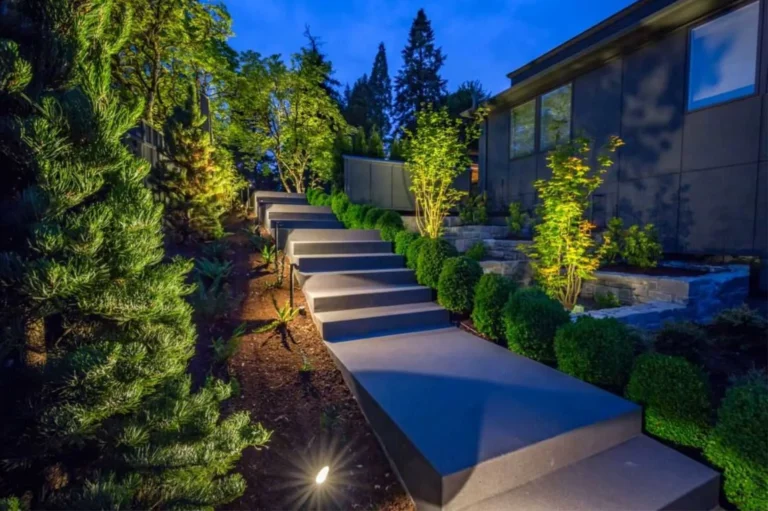
Planning Logic: Prioritize “tread lighting” integrated into the stair risers. Use low-voltage LED strips under the handrails for continuous ambient light without glare.
Second-Order Effect: The handrail lighting also defines the perimeter of the deck for people viewing it from the yard, creating a “floating” architectural effect.
The Outdoor Dining & Kitchen Area
Constraint: Need for high-clarity light for food prep without ruining the “intimate” dining mood.
Planning Logic: Separate the zones into different circuits. Use high-CRI (Color Rendering Index) task lighting over the grill and dimmable, warm-toned pendants over the table.
Financial Dynamics: Costs and Resource Allocation
Budgeting for patio lighting is often where plans fail. Many homeowners underestimate the cost of “the invisible” transformers, wire, and labor.
| Component | Standard Grade (%) | Professional Grade (%) | Why the difference? |
| Fixtures | 60% | 40% | Pro fixtures are brass/copper; last 20+ years. |
| Installation/Labor | 20% | 40% | Complex trenching and hardscape integration. |
| Control Systems | 10% | 15% | Smart-home integration and zone dimming. |
| Infrastructure (Wire) | 10% | 5% | Thicker gauge wire prevents voltage drop. |
The Opportunity Cost of Cheap Materials: Aluminum fixtures are significantly cheaper upfront, but typically pit and corrode within 3–5 years in humid or coastal environments. Choosing solid brass or copper is a “buy once, cry once” strategy that yields a lower total cost of ownership over a decade.
Tools, Strategies, and Technical Support Systems
A professional planning process utilizes specific tools to ensure the system performs as expected.
-
Voltmeters: Essential for testing “voltage drop.” If the voltage at the end of a wire run is too low, LEDs will flicker or fail prematurely.
-
Photometric Data (IES Files): Professional designers use these digital files to simulate how light will spread across a patio before a single fixture is purchased.
-
Color Temperature (Kelvin) Consistency: Mixing 2700K (warm) and 4000K (cool) lights on a single patio creates a disjointed, “unintentional” look. Consistency is a hallmark of professional planning.
-
Astronomical Timers: These smart controllers calculate sunset and sunrise based on GPS, ensuring the lights are never on during the day, regardless of the season.
-
Glare Shields/Hex Louvers: Small honeycomb inserts for fixtures that “cut” the light so it doesn’t hit the eye directly.
-
Direct Burial Wire (12/2 or 10/2): The “arteries” of the system. Using under-gauged wire is the leading cause of system failure in DIY projects.
Risk Landscape and Failure Modes
Outdoor lighting exists in a hostile environment characterized by moisture, temperature fluctuations, and biological interference.
-
The “Wicking” Effect: If a wire splice is not perfectly waterproof (using silicone-filled connectors), moisture can travel inside the wire jacket all the way to the fixture or transformer, causing a system-wide short.
-
Voltage Drop: In 12V systems, power loses strength over distance. Without proper planning, the lights furthest from the transformer will be dimmer than those closest to it.
-
Thermal Stress: Cheaper LED chips generate significant internal heat. If the fixture housing doesn’t have an adequate “heat sink,” the LED will shift color (usually turning blue or green) before dying.
-
Over-illumination: Excessive light disrupts the circadian rhythms of local wildlife and can contribute to “sky glow,” obscuring the stars and violating local “Dark Sky” ordinances.
Long-Term Governance and Maintenance
A lighting system is not a “set and forget” installation. It is a dynamic system that requires a governance schedule.
The Maintenance Checklist
-
Quarterly: Clean lenses of hard water deposits (calcium) that block light output.
-
Biannually: Prune foliage away from fixtures. As plants grow, they can completely block a light source or create a fire hazard if using older halogen bulbs.
-
Annually: Check the transformer’s lug connections. Copper wire expands and contracts with the seasons, which can loosen the connections over time.
Adaptive Adaptation
As your landscape matures, your lighting must move. A fixture that lit a 2-foot sapling will be useless once that tree reaches 15 feet. A good plan includes “slack” in the wire to allow for moving fixtures outward as the garden expands.
Evaluation Metrics and Documentation
How do you evaluate if your patio lighting is successful? Professional designers look for qualitative and quantitative signals.
-
Leading Indicators: Consistent voltage readings at all terminals; moisture-free seals during the first rain event.
-
Lagging Indicators: Total hours of use; frequency of bulb/driver replacement; neighbor feedback regarding light trespass.
-
Quantitative Signal: Using a light meter to ensure that egress paths have a minimum of 1 foot-candle of light.
Documentation Examples
-
The “As-Built” Map: A digital or hand-drawn map showing exactly where the wires are buried. Without this, a simple gardening project three years later could result in a severed main line.
-
The Fixture Schedule: A list of every fixture model, its wattage, and its color temperature. This makes replacing a single damaged unit much simpler in the future.
Common Misconceptions
-
“Solar lights are just as good.” Correction: Solar lights lack the “punch” for architectural lighting and almost always fail during the winter months when the sun is low. They are decorative, not functional.
-
“More lumens = better lighting.” Correction: High lumens cause glare. It’s better to have more low-output fixtures than one high-output fixture.
-
“LEDs don’t produce heat.” Correction: The diode is cool, but the driver (the electronics) produces significant heat. Cheap LEDs in plastic housings will overheat and fail.
-
“You should light everything.” Correction: Darkness is a design element. Shadows create the depth that makes a patio feel three-dimensional.
Conclusion
Effective patio lighting is an exercise in restraint and technical precision. It is the art of manipulating the invisible to make the visible more meaningful. By adhering to a layered approach, respecting the physics of voltage and light spread, and planning for the long-term growth of the environment, a patio can be transformed from a simple slab of stone into a sophisticated architectural retreat. The ultimate success of a project lies not in the brilliance of the lights, but in the harmony between the illumination, the architecture, and the natural world it inhabits.