Common Outdoor Lighting Installation Mistakes: A Professional Guide
Common outdoor lighting installation mistakes. The transition from a daylight-dependent environment to a curated nocturnal landscape is a complex engineering feat often disguised as a simple home improvement task. While the placement of a few fixtures might seem intuitive, the reality of exterior electrical systems involves a relentless battle against environmental degradation, fluctuating line voltages, and the physics of light distribution. When these variables are ignored, the resulting system is not merely aesthetically disappointing but can become a liability, failing prematurely or creating safety hazards that are expensive to remediate.
Outdoor lighting exists in a high-entropy environment. Between the corrosive nature of soil moisture, the UV degradation of plastics, and the thermal cycling of high-output LEDs, every component is under constant stress. Consequently, the delta between a professional-grade installation and an amateur attempt is often invisible at the moment the switch is first flipped. The true quality of an installation reveals itself eighteen months later, during the first deep freeze or after a season of heavy monsoon rains.
To master this discipline, one must move beyond the “plug-and-play” mindset. It requires an analytical approach to the property’s topography, an understanding of the specific lumens-to-wattage ratios of modern diodes, and a commitment to the “invisible” work: the burial depth of wires, the integrity of splices, and the load balancing of the transformer. This article serves as a definitive exploration into the systemic failures that plague exterior lighting, providing the technical depth required to ensure long-term operational success.
Understanding “Common Outdoor Lighting Installation Mistakes”

Grasping the nature of common outdoor lighting installation mistakes requires a fundamental shift in perspective: one must view the lighting system as an electrical circuit first and a decorative asset second. Many failures stem from a “visual-first” approach, where fixtures are placed based on where light is desired without calculating the voltage drop required to deliver that light. When voltage falls below the operating threshold of an LED driver, the result is flickering or strobing—a classic symptom of a poorly planned circuit.
A significant oversimplification in the industry is the belief that “waterproof” components allow for lax installation standards. In reality, most outdoor components are rated for ingress protection (IP), but these ratings are contingent on proper orientation and seal integrity. A fixture rated for downward-facing rain will fail if mounted horizontally where water can pool against the gasket. Thus, a primary mistake is the failure to account for gravitational water flow and capillary action within the wiring itself.
Furthermore, there is a pervasive misunderstanding regarding the “rebound effect” of LED technology. Because LEDs draw so little power, installers often believe they can run nearly infinite lengths of thin-gauge wire. This ignores the fact that even low-amperage draws over long distances encounter resistance, leading to heat buildup and power loss. Managing these mistakes involves a synthesis of electrical theory, material science, and spatial awareness.
Deep Contextual Background: Systemic Evolution
The history of outdoor illumination is a narrative of increasing complexity paired with decreasing energy requirements. In the era of incandescent and halogen lighting, the primary challenge was heat. High-wattage bulbs melted plastic housings and required heavy-duty wiring to handle high amperage. If a system failed, it was usually due to a burnt-out filament or a melted socket. The “mistakes” of that era were often related to fire safety and thermal clearance.
The current LED era has traded thermal risks for electronic sensitivity. Modern diodes are far more durable than filaments, but the “drivers” (the power supplies that convert AC to DC) are vulnerable to voltage spikes, moisture vapor, and poor power quality. Today, common outdoor lighting installation mistakes are more likely to involve microscopic corrosion on a circuit board or a mismatched dimmer frequency than a literal fire.
This evolution has also seen a move toward “smart” infrastructure. While this offers unprecedented control, it introduces software as a potential point of failure. A system that works tonight may fail tomorrow due to a firmware conflict or a weak mesh network signal between the transformer and the gateway. The modern installer must be as much a network technician as an electrician.
Conceptual Frameworks and Mental Models
To avoid systemic errors, professionals utilize several mental models:
-
The “Vacuum Effect” Model: Recognizing that as a fixture heats up and cools down, it creates a pressure differential. If not properly vented or sealed, it will literally “suck” humid air through the wire strands (wicking).
-
The 80/20 Load Framework: Never load a transformer beyond 80% of its rated capacity. This provides a “thermal buffer” that accounts for the inrush current of LEDs and the increased resistance as wires age.
-
The “Hierarchy of Sight”: Designing based on the human eye’s adaptation to darkness. A mistake is over-lighting, which causes pupil contraction and makes the unlit areas feel dangerously dark (the “black hole” effect).
-
The Inverse Square Law Awareness: Understanding that doubling the distance from a light source reduces the intensity by 75%. Placing fixtures too far from their targets is a frequent waste of energy and capital.
Key Categories of Failure and Trade-offs
Identifying where installations go wrong requires a taxonomy of errors.
| Category | Primary Error | Long-term Consequence | Complexity to Rectify |
| Wiring & Circuitry | Undersized wire gauge | Voltage drop, dim fixtures, flickering | High (requires re-trenching) |
| Environmental | Shallow burial depth | Damage from mowers, edgers, or frost heave | Moderate |
| Optical | Direct glare (unshielded) | Discomfort, reduced safety, neighbor disputes | Low (requires re-aiming) |
| Structural | Poor fixture anchoring | Leaning fixtures, moisture ingress at base | Moderate |
| Control | Mechanical timers | Energy waste, lack of seasonal adjustment | Low |
Realistic Decision Logic
When choosing a wiring method, the installer faces a trade-off between the “Daisy Chain” and the “Hub” method. The Daisy Chain is cheaper and uses less wire, but is highly susceptible to voltage drop at the end of the run. The Hub method (running multiple lines to a central point) is more expensive in terms of materials but ensures consistent voltage and makes future troubleshooting significantly easier.
Detailed Real-World Scenarios
Scenario 1: The “Ghosting” LED Pathway
A homeowner installs a series of high-end LED path lights. At night, even when “off,” they emit a faint, flickering glow.
-
The Failure: The installer used a standard indoor-rated smart switch on a low-voltage transformer. A small “leakage” current passes through the switch to power its internal radio, which is enough to partially charge the capacitors in the LED drivers.
-
The Correction: Installing a “leakage” bypass or using a mechanical relay.
Scenario 2: The Saturated Junction Box
During a particularly wet spring, a backyard lighting zone trips the GFCI breaker repeatedly.
-
The Failure: The installer used standard wire nuts wrapped in electrical tape inside an underground junction box. Over time, the tape adhesive failed, and the box filled with groundwater.
-
The Compounding Risk: Constant tripping can eventually damage the sensitive electronics in the LED transformer, leading to a total system replacement.
Planning, Cost, and Resource Dynamics

Economic considerations are often the root of common outdoor lighting installation mistakes. Cutting corners on “invisible” costs like the quality of wire connectors frequently leads to higher long-term maintenance labor costs.
| Item | Budget Option | Professional Option | Savings vs. Risk |
| Connectors | Electrical Tape/Wire Nuts | Gel-filled Heat Shrink | Saving $50 now risks a $500 repair |
| Wire | 16/2 Gauge | 12/2 or 10/2 Gauge | 16-gauge limits future expansion |
| Transformer | Plastic/Indoor rated | Stainless Steel/Multi-tap | Stainless resists corrosion for 20+ years |
Opportunity Costs
Choosing a cheap transformer with only one “tap” (e.g., 12V) means you cannot adjust for voltage drop. A multi-tap transformer (offering 13V, 14V, 15V) allows you to push higher voltage to the furthest fixtures, ensuring they all burn at the same intensity. The “cost” of the cheaper unit is a permanent reduction in light quality.
Tools, Strategies, and Support Systems
Successful installation relies on precision measurement over guesswork.
-
True RMS Multimeter: Crucial for measuring the exact voltage at the last fixture in a run while the system is under load.
-
Voltmeter-integrated Fixtures: High-end lamps that allow for real-time monitoring of power health.
-
Dielectric Grease: A simple but effective barrier against moisture at connection points.
-
Trenching Spade vs. Power Trencher: Using a power trencher ensures a consistent 6-inch depth, protecting wires from surface activity.
-
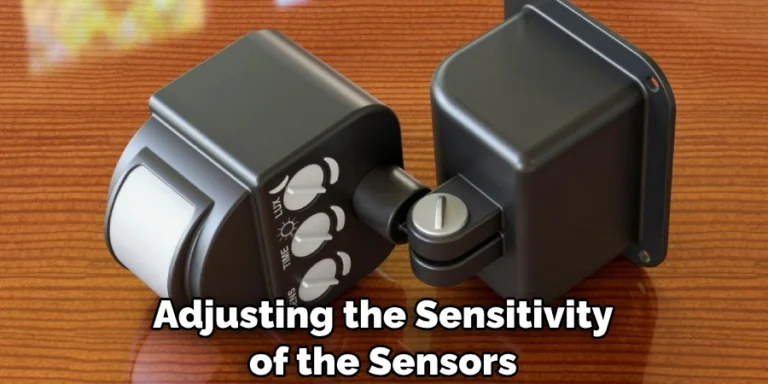
Astronomical Timers: These use GPS coordinates to calculate sunset/sunrise, eliminating the need for photocells that can be blocked by foliage.
Risk Landscape and Failure Modes
Ignoring the fundamentals of exterior electrical work creates a taxonomy of risk:
-
Thermal Stress: If a fixture’s “heatsink” is buried in mulch, the LED will overheat, and its lifespan will drop from 50,000 hours to 5,000.
-
Voltage Fluctuations: Spikes from the utility grid can “fry” cheap drivers that lack surge protection.
-
Biographical Risk: Future homeowners or landscapers may hit shallow wires, leading to a dangerous ground fault if the system isn’t properly protected by a GFCI.
Governance, Maintenance, and Long-Term Adaptation
A lighting system is a living asset. It requires a “governance” structure—a set of rules for how it is monitored and updated.
Layered Maintenance Checklist
-
Spring: Inspect fixtures for frost heave. Re-aim lights that have been shifted by snow loads. Clean lenses to remove salt or mineral deposits.
-
Autumn: Prune back vegetation that has grown over fixtures (a common cause of overheating). Check the transformer’s cooling vents for insect nests.
-
Every 3 Years: Perform a voltage audit. As wires age and connections oxidize, resistance increases. You may need to move a wire to a higher voltage tap on the transformer.
Measurement, Tracking, and Evaluation
How do you know if an installation has avoided common mistakes?
-
Leading Indicators: The voltage at the furthest lamp is within 10.5V to 11.5V (for 12V systems). The transformer is running at <60°C.
-
Lagging Indicators: Mean Time Between Failures (MTBF). If you are replacing more than 5% of your lamps annually, you have a systemic installation issue.
-
Documentation: Create an “as-built” wiring map. This is the single most valuable document for any future troubleshooting.
Common Misconceptions and Oversimplifications
-
Myth: “LEDs don’t generate heat.”
-
Correction: The diode itself stays cool, but the back of the chip and the driver generate significant heat that must be dissipated via the fixture body.
-
-
Myth: “Black wire is ‘outdoor-rated’.”
-
Correction: Only the wire labeled “Direct Burial” (DB) or “Sunlight Resistant” is rated for the chemicals in soil and UV exposure.
-
-
Myth: “Solar lights are a viable alternative to wired systems.”
-
Correction: Solar is a “disposable” aesthetic choice; it lacks the lumen output and reliability required for safety or architectural highlighting.
-
-
Myth: “If it’s 12 volts, I can’t get a shock.”
-
Correction: While less dangerous than 120V, 12V can still cause a fire if a short circuit occurs in dry mulch.
-
Ethical and Practical Considerations
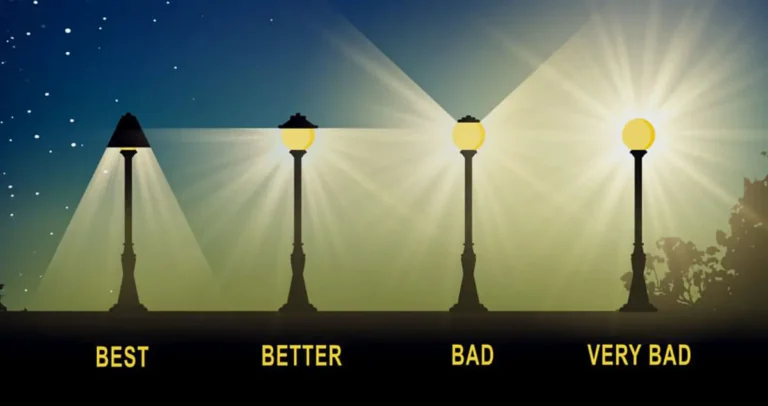
In modern lighting, “Dark Sky” compliance is an ethical imperative. Many common outdoor lighting installation mistakes involve “light pollution,” shining light into the sky or neighbors’ windows. This disrupts migratory patterns for birds and affects human circadian rhythms. Using shielded fixtures and “warm” color temperatures (2700K to 3000K) is not just a design choice; it is a matter of environmental responsibility.
Conclusion
The pursuit of a flicker-free, durable outdoor lighting system is a matter of respecting the details that remain unseen. By avoiding the common outdoor lighting installation mistakes outlined, such as undersized wiring, poor moisture protection, and inadequate thermal management, one ensures that the landscape remains a curated asset for decades. Professional installation is defined by the resilience of the system under duress. When the design is balanced with technical rigor, the result is an environment that feels both safe and ethereal, unburdened by the frustration of constant repair.