Common Low Voltage Lighting Mistakes: A Definitive Engineering & Design Guide
Common low-voltage lighting mistakes. The architectural integration of low-voltage lighting has transitioned from a luxury niche to a standard expectation in modern exterior design. While the 12V and 24V systems common in residential and commercial landscapes offer enhanced safety and energy efficiency compared to their line-voltage predecessors, their apparent simplicity is deceptive. The lower the voltage, the more sensitive the system becomes to the physics of electrical resistance and the quality of mechanical connections.
A single error in calculating the load or the distance of a run can lead to a cascade of systemic failures from premature bulb burnout to total circuit collapse. Because these systems operate at the edge of efficient power transmission, there is very little margin for the “trial and error” approach that characterizes many DIY installations. Professional-grade results require a rigorous adherence to the laws of electricity and a sophisticated understanding of how environmental factors influence hardware longevity.
This article serves as a comprehensive post-mortem of the most frequent errors encountered in the field. It moves beyond basic troubleshooting to examine the systemic root causes of failure. By dissecting the intersection of electrical load, thermal management, and architectural intent, we can establish a framework for robust, high-performance illumination that withstands both time and the elements.
Understanding “Common Low Voltage Lighting Mistakes”

In the context of outdoor illumination, “low voltage” typically refers to 12-volt or 24-volt systems powered by a transformer that steps down the standard 120V household current. Identifying common low-voltage lighting mistakes requires an appreciation for the inverse relationship between voltage and amperage. When voltage is lowered, amperage must increase to deliver the same amount of power ($P = V \times I$). This increased current flow makes the system significantly more susceptible to resistance within the wires and connectors.
One of the most prevalent misunderstandings is the belief that LED technology has made voltage drop calculations obsolete. While LEDs are far more efficient than the halogen lamps of the past, they are also digitally sensitive. A halogen bulb might simply dim when the voltage drops; an LED driver may flicker, strobe, or fail if it receives 9V instead of the required 12V. Consequently, the margin for error has actually narrowed as the technology has become more “advanced.”
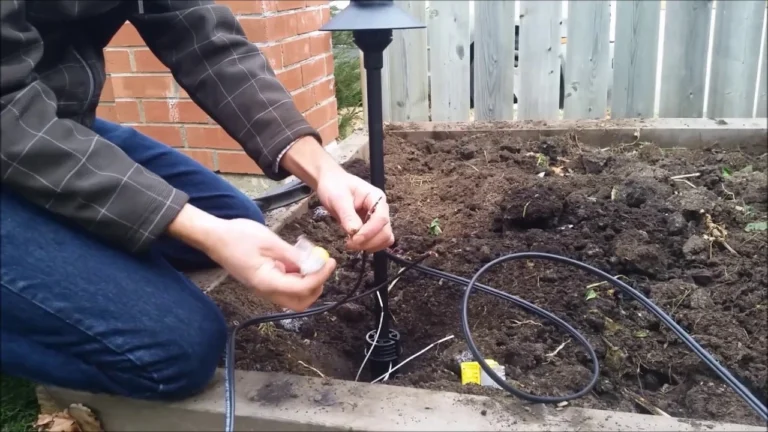
Oversimplification also occurs at the junction point. Many installers treat outdoor electrical connections with the same casualness as indoor wiring. However, the subterranean environment is chemically active and physically demanding. Using improper connectors is perhaps the most frequent point of failure, leading to oxidation that increases resistance, creates heat, and eventually severs the circuit. True mastery of these systems involves treating the outdoor environment as a hostile biological and chemical laboratory.
Historical Context: The Shift to 12V and 24V Systems
The adoption of low-voltage lighting was driven by two primary factors: safety and ease of installation. In the mid-20th century, landscape lighting utilized 120V “line voltage,” which required deep trenching (18-24 inches), rigid conduit, and professional electrical permits. A nicked wire was potentially lethal to both humans and pets.
The introduction of the 12V transformer changed the landscape literally. It allowed for shallow burial (6 inches) and eliminated the risk of lethal shock. Throughout the 1980s and 90s, the industry was dominated by heavy, copper-wound magnetic transformers and power-hungry halogen lamps. These systems were robust but suffered from “over-voltage” at the start of the line and “under-voltage” at the end, leading to uneven bulb life.
The current era is defined by the “Electronic Revolution.” Modern switching power supplies and LED arrays have replaced magnetic cores and filaments. This shift has introduced new complexities, such as Total Harmonic Distortion (THD) and Electromagnetic Interference (EMI), requiring a more sophisticated approach to wiring and system design than the “plug-and-play” kits of the previous generation would suggest.
Conceptual Frameworks for Electrical Stability

To avoid systemic failure, designers should employ specific mental models during the planning phase.
1. The “Voltage Drop” Calculus
This is the most critical framework. Every foot of copper wire offers resistance. As electricity travels, energy is lost as heat.
The goal is to maintain the voltage at the fixture within the manufacturer’s specified range (usually 10V–15V for multi-tap transformers). Falling outside this “sweet spot” is the root cause of most performance issues.
2. The Hub-and-Spoke vs. Daisy Chain Model
In a daisy chain, fixtures are wired in a single line. The first fixture gets the most power, and the last gets the least. The Hub-and-Spoke model involves running a “home run” wire to a central waterproof junction box (the hub), with equal-length leads to each fixture. This ensures uniform voltage distribution and simplifies troubleshooting.
3. The Thermal Envelope Theory
Electrical components, especially LED drivers and transformers, generate heat. This framework mandates that enclosures be sized not just for the physical components, but for the volume of air required to dissipate that heat. Overcrowding a transformer cabinet is a leading cause of premature component “death” due to thermal runaway.
Categories of System Failure and Technical Trade-offs
| Category | Primary Symptom | Root Cause | Trade-off |
| Voltage Drop | Dimming or flickering at the end of a run | Undersized wire gauge or excessive length | Heavier wire is more expensive but ensures longevity |
| Oxidation Failure | Intermittent power or “hot” junctions | Non-waterproof wire nuts | Gel-filled connectors are slower to install, but prevent corrosion |
| Over-Amperage | Tripped circuit breakers or melted insulation | Exceeding the transformer’s VA rating | Higher-capacity transformers have larger footprints |
| Mechanical Stress | Cut wires after landscaping/gardening | Shallow burial or lack of conduit | Conduit adds high cost but protects the asset |
| Photocell Conflict | Lights cycling on and off at dusk | Improper sensor placement near light sources | Remote sensors require extra wiring but are more reliable |
Real-World Scenarios and Failure Analysis
Scenario A: The Long-Distance Path Run
A homeowner installs a 200-foot run of path lights using 16-gauge wire.
-
The Failure: The lights furthest from the house barely glow, while the ones closest to the transformer burn out frequently.
-
The Analysis: The 16-gauge wire is too thin for the distance. The high resistance caused a massive voltage drop. To compensate, the transformer was set to the 15V tap, which “fried” the first few bulbs while failing to reach the last ones.
-
The Fix: Replace with 12-gauge wire and utilize a “center-fed” loop to balance the load.
Scenario B: The Retaining Wall Integration
LED tape lights are embedded under the stone lip of a newly built retaining wall.
-
The Failure: Within six months, the lights fail in sections.
-
The Analysis: The installer used standard indoor connectors. Moisture trapped between the stones caused electrolytic corrosion. Furthermore, no “expansion loop” was left in the wire, so the natural settling of the wall snapped the connections.
-
The Fix: Use IP68-rated waterproof connections and leave slack in the wire to accommodate masonry movement.
Scenario C: The “Ghosting” LED
A set of high-end LED uplights remains dimly lit even when the timer is off.
-
The Failure: “Ghosting” or induced voltage.
-
The Analysis: The low-voltage wires were run in the same conduit or trench as high-voltage 120V lines. The electromagnetic field from the 120V line “leaked” enough current into the 12V line to partially power the sensitive LEDs.
-
The Fix: Maintain a minimum 6-inch separation between low and high-voltage cabling.
Planning, Cost, and Resource Dynamics
The financial burden of common low-voltage lighting mistakes is rarely found in the initial purchase; it is found in the “re-work.”
The Cost of Quality vs. The Cost of Failure
| Item | Budget Approach (High Risk) | Professional Approach (Low Risk) | Delta |
| Wire Gauge | 16-gauge ($0.40/ft) | 12-gauge ($0.90/ft) | +$0.50/ft |
| Connectors | Standard Wire Nuts ($0.10 ea) | Heat-shrink/Gel ($2.50 ea) | +$2.40/conn |
| Transformer | Plastic/Indoor ($60) | Stainless/Multi-tap ($300) | +$240 |
Opportunity Cost: Choosing the budget approach often leads to a system life of 2–3 years. The professional approach, while 3x more expensive initially, typically lasts 15+ years. The labor cost to re-trench a failed system is usually 200% higher than the original installation because of established landscaping.
Tools, Strategies, and Diagnostic Support
To maintain a low-voltage system, certain specialized tools are non-negotiable:
-
True RMS Multimeter: Essential for measuring actual voltage at the fixture. Standard meters can be inaccurate with modern electronic transformers.
-
Clamp-on Ammeter: Used to check the total load on a circuit to ensure it doesn’t exceed 80% of the wire’s rated capacity.
-
Trenching Spade vs. Power Trencher: Strategic choice based on soil density and existing root systems.
-
Volt-Ohm Meter (VOM): For continuity testing to find breaks in buried lines.
-
Heat Gun: For proper application of adhesive-lined heat shrink tubing.
-
Wire Strippers (Precision): Prevents nicking the copper strands, which reduces the effective gauge and creates “hot spots.”
Risk Landscape: Compounding Technical Failures
Failure in low-voltage systems is rarely isolated. It is usually “compounding.”
-
The Cascade Effect: A loose connection creates resistance → resistance creates heat → heat melts the insulation → moisture enters the wire → the wire oxidizes for several feet inside the jacket → the entire run must be replaced.
-
The Biological Risk: In many regions, the salt from fertilizers or the acidity of the soil acts as a catalyst for corrosion. A failure to use “Direct Burial” (DB) rated cable is a fatal error, as standard insulation will deteriorate over time, allowing the copper to turn to green dust (cupric oxide).
Long-Term Governance and System Adaptation
A lighting system is a living entity that must evolve with the landscape.
Layered Maintenance Checklist:
-
Bi-Annually: Check for “overgrowth.” Plants can grow over fixtures, trapping heat and blocking light.
-
Annually: Tighten transformer lugs. Thermal expansion and contraction can loosen the screws holding the wires in place, leading to arcing.
-
Post-Storm: Inspect for exposed wires caused by soil erosion.
-
Upgrade Trigger: If you transition from 50% halogen to 100% LED, the “voltage rise” may cause your remaining bulbs to burn out. Re-test the voltage at every tap after any major change in load.
Metrics for Success: Measuring System Health
How do you know if the system is actually robust?
-
Voltage Uniformity: The variance between the first and last fixture should be less than 2 volts.
-
Amperage Buffer: The total load on the transformer should not exceed 80% of its rated capacity (e.g., a 300W transformer should ideally carry a 240W load).
-
Insulation Resistance: Periodically testing the “resistance to ground” can signal if a wire’s jacket is beginning to fail before the system actually shorts out.
Common Misconceptions and Industry Myths
-
Myth: “LEDs don’t need thick wire because they use low watts.”
-
Correction: While they use fewer watts, they are more sensitive to voltage drop. Thinner wire still causes a drop, which causes LED driver failure.
-
-
Myth: “You can just bury the wire a few inches deep.”
-
Correction: While legal, shallow wires are frequently cut by edgers, aerators, and shovels. 6-8 inches is the functional minimum.
-
-
Myth: “All transformers are the same.”
-
Correction: Magnetic transformers are heavy and last forever, but are “dumb.” Electronic transformers are efficient but susceptible to power surges. Multi-tap transformers (12V, 13V, 14V, 15V) are required for long runs.
-
-
Myth: “Electrical tape is a waterproof seal.”
-
Correction: Electrical tape is never waterproof. It is a temporary mechanical bind. Only gel-filled or heat-shrink connectors are suitable for burial.
-
Conclusion
Avoiding common low-voltage lighting mistakes is a matter of respecting the physics of the medium. The transition to low voltage was never a license to ignore the fundamentals of electrical engineering; rather, it shifted the stakes from “safety” to “systemic integrity.” A successful installation is one where the hand of the installer is invisible, leaving only the intended interplay of shadow and light. By focusing on robust connections, proper wire sizing, and a disciplined maintenance schedule, the landscape becomes a canvas that remains illuminated long after the initial installation is forgotten.